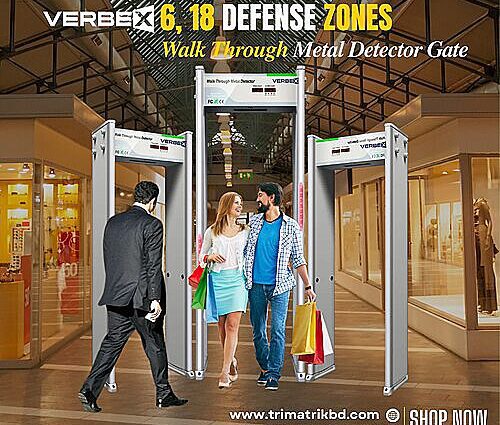
Best walk through metal detectors
The best walk-through metal detectors are those with multiple detection zones that can pinpoint the location of metal objects on a person’s body. The more detection zones a detector has, the more accurate it is at locating metal.
Accuracy of best walk through metal detectors
The accuracy of walk-through metal detectors (WTMDs) depends on several factors, including the technology used, the environment, and the sensitivity settings. However, when it comes to performance and reliability, some general points can be made:
1.Detection Sensitivity:
Modern walk-through metal detectors typically have high sensitivity, detecting a range of metals from very small pieces e.g. small knives or small caliber ammunition to large objects (e.g., guns, large knives, etc.).
2. Technology:
Very Low Frequency (VLF) detectors are common and work by creating an electromagnetic field and detecting metal objects through the disruption of that field. These detectors are very accurate in differentiating between types of metal, especially with advanced signal processing. Sensitivity can be adjusted to suit the environment, such as at airports (where a higher sensitivity might be desired) versus concert venues or office buildings (where more moderate settings might be sufficient).
How effective are walk through metal detectors?
Walk-through metal detectors (WTMDs) are generally very effective at detecting metallic objects, particularly larger threats like firearms, knives, and other weapons. However, their overall effectiveness depends on several factors, including the type of metal detector, the environment in which it’s used, calibration, sensitivity settings, and the type of metal being detected.
1.Detection of Large Threats
✓ Effectiveness: Walk-through metal detectors are highly effective at detecting large metal objects such as guns, knives, and other weapons. Modern systems typically have detection accuracy of 95✓% or higher for large threats. The detectors work by emitting a magnetic field, which is disrupted by the presence of metal objects. Large metallic objects are very likely to set off an alarm.
✓ Reliability: For objects like firearms, the detection rate can approach 100% in well-maintained and properly calibrated systems, making them a crucial tool in high-security areas like airports, government buildings, courthouses, and sporting events.
2.Detection of Smaller Threats
✓ Effectiveness: Moderate to High ,walk-through metal detectors can also detect smaller metallic items , such as small knives, metal blades, or tools. However, the effectiveness depends on the sensitivity of the machine.
✓ High Sensitivity: A detector set to a high sensitivity can detect smaller items but may result in more false positives (i.e., harmless metallic objects like coins, belt buckles, or zippers setting off alarms).
✓ Lower Sensitivity: To reduce false alarms, the sensitivity is often set lower in environments where the risk of small items is less critical (e.g., schools, concert venues). This may cause some smaller threats to go undetected.
3.Detection of Non-ferrous Metals
Effectiveness: Varies by Metal Type, Walk-through detectors generally have higher sensitivity to ferrous metals (e.g., iron, steel) because these materials disrupt electromagnetic fields more significantly than non-ferrous metals like aluminum or brass. For non-ferrous metals , some detectors may be less effective, although newer models with advanced technologies can detect a broader range of metals.
Example: A small brass or aluminum knife might not always trigger an alarm, especially in a detector with lower sensitivity settings or if the object is small and positioned on a person’s body in a way that reduces detection likelihood.
4.False Positives and Environmental Impact
Effectiveness: Walk-through metal detectors can sometimes produce false alarms due to the presence of non-threatening metallic objects (e.g., coins, keys, belt buckles, and jewelry). This is especially true if the detector is set to a very sensitive mode.
Calibration: Proper calibration is essential for reducing false positives. Modern systems can adjust their sensitivity to minimize unnecessary alerts while still being able to detect dangerous objects.
Environmental Factors: Metal detectors can sometimes be affected by environmental factors such as electromagnetic interference (e.g., from other equipment, walls, and even large metal structures nearby). Interference can lead to either false positives or false negatives.
5. Multizone Detection Systems
Effectiveness : Higher Detection Accuracy some advanced walk-through metal detectors feature multiple detection zones (e.g., upper body, lower body, legs). These detectors can pinpoint the location of the metallic object , helping security personnel to more accurately search the individual and reduce unnecessary alarms. The added accuracy improves overall effectiveness in high-traffic areas.
6.Detection Speed
Effectiveness: Very High Walk-through detectors are generally very efficient, allowing security staff to screen large numbers of people quickly. As a result, they are commonly used at airports, stadiums, government buildings, and event venues where large crowds need to be screened in a short amount of time. The speed and ease of use make them ideal for high-volume environments.
What is a walk through metal detector?
Walk-through metal detectors use electromagnetic fields to detect metal objects on a person’s body . As a person passes through, the metal detector’s electromagnetic field detects metal objects, triggering an alarm if necessary.
What are the good things about metal detectors?
Metal detectors can detect weapons such as knives , guns and explosives quickly and reliably even if they’re hidden inside a bag or pocket. This makes them an invaluable tool for keeping public places safe by preventing individuals from bringing harmful objects onto the premises.
What metals do walk through metal detectors detect?
In active detection, a metal detector generates a time-varying magnetic field, either in the archway of a walk-through model or in the space near a handheld model, to determine the amount of metal present in an object. Metals such as iron , nickel and cobalt are detected by passive and active metal detectors.
Do walk through metal detectors detect glass?
Metal detectors, on the other hand, cannot detect glass, bone, or stone. Your needs determine which inspection system—or systems—is the right choice for your production.
How long can a metal detector detect?
The short answer is from 6-10 depending on the soil for most good detectors and coin-sized objects. Larger objects can be detected as much as 14-16″ in ideal conditions. Things that can impact depth include: Size of object being detected.
What is the principle of walking through metal detectors?
For the walk-through metal detector, the generated energy is in the form of a magnetic field. The interaction of the generated magnetic field with certain types of objects in the portal region of the detector and the ability to detect this interaction is the basis of operation for walk-through metal detectors.
Is it safe to walk through metal detectors?
Additionally, it’s been determined that repeated exposure to metal detectors is safe because there is no associated radiation risk. Therefore, no matter where walk-through metal detectors are installed,It’s safe to walk through them as often as needed without fearing for your health
Conclusion
Walk-through metal detectors are very effective at detecting metal objects, particularly larger threats such as weapons. They provide quick and efficient screening, especially in high-security areas. However, their effectiveness can be compromised when it comes to smaller objects, non-metallic threats, or when environmental conditions affect performance. For optimal security, metal detectors are often used in combination with other screening technologies, such as x-ray machines or body scanners, to detect a broader range of threats.
Question: What is the price range for an Archway Metal Detector Gate?
Answer: The price of an Archway Metal Detector Gate typically ranges from $2,000 to $7,000, depending on the features and technology. Basic models with standard detection capabilities are on the lower end of the price range. Advanced models with multi-zone detection and enhanced sensitivity cost more. Prices can also vary based on the manufacturer, warranty, and additional services like installation.
Question: What is the price of an Archway Metal Detector Gate in BDT (Bangladeshi Taka)?
Answer:
The price of an Archway Metal Detector Gate in Bangladesh (BDT) can range from approximately BDT 250,000 to BDT 600,000 for basic models. More advanced versions with features like multi-zone detection or higher sensitivity can cost upwards of BDT 700,000 or more. Prices vary depending on the supplier, specific model, and additional services such as installation and maintenance. For an accurate price in BDT, it’s advisable to reach out to local distributors or manufacturers in Bangladesh.