
Every Event Needs a Security Metal Detector Gate
Security metal detector: In the contemporary landscape, where the prioritization of public safety is paramount, it is essential for security measures to continuously adapt to emerging challenges. Among these measures, security metal detector gates serve as a crucial instrument in protecting public venues, events, and private establishments. These gates function as the initial barrier, identifying concealed weapons and metallic threats to prevent their access to secure locations.
Whether utilized in airports, educational institutions, sports arenas, or corporate environments, metal detector gates offer a dependable and non-intrusive approach to bolstering security. This article will delve into the significant advantages of security metal detector gates, their contribution to modern security frameworks, and the reasons they represent a vital investment for any organization dedicated to ensuring safety.
What is the metal detector?
A metal detector is an instrument that detects the nearby presence of metal . Metal detectors are useful for finding metal objects on the surface, underground, and under water. A metal detector consists of a control box, an adjustable shaft, and a variable-shaped pickup coil.
Where is a metal detector used?
A metal detector detects metal by inducing magnetic fields in them and in return the receiver picks up that magnetic field while indicating the presence of it. Metal detectors are used for screening purposes in malls,airports and stations
Security metal detectors have many advantages, including:
What is the advantages of security metal detector
Safety: Metal detectors can prevent weapons, explosives, and other dangerous items from entering protected areas. They are particularly effective at detecting firearms, including handguns, semi-automatic pistols, and revolvers.
- Increased security
- Metal detectors can quickly and efficiently identify potential threats and neutralize them before entering a secure area.
- Integrated with other systems
- Security metal detectors can be integrated with existing business management systems.
- Combined with other technology
- Metal detectors can be combined with infrared red cameras that measure temperature as well as for metal objects.
- Versatile
- Metal detectors can be used in a variety of settings, including airports, schools, government buildings, and large events.
- Quality control
- Metal detectors can accurately detect the presence of metal particles in production, which can help companies comply with standards and regulations.
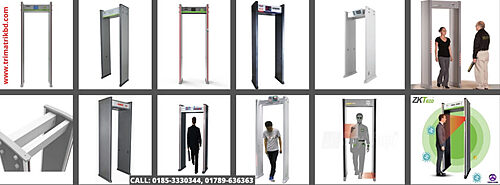
What is the use of metal detectors in security?
Metal detectors play a crucial role in preventing weapons,explosives and other dangerous items from entering protected areas.This is essential in places like airports, schools, government buildings, and large events, where security is a top priority.
What is the function of a metal detector?
A metal detector is an instrument that detects the presence of metal nearby. Metal detectors are useful for finding metal inclusions hidden within objects, or metal objects buried underground.
Properties of metal detector
Security metal detectors are essential tools for detecting metallic objects that may pose a security risk. These detectors are used in various settings such as airports, government buildings, schools, and events. Here are the key properties and features of security metal detectors:
1.Detection Technology :
- Electromagnetic Induction: Metal detectors use electromagnetic fields to detect metallic objects. When a metal object enters the detector’s field, it disrupts the electromagnetic field, which the detector senses and alerts the operator.
- Pulse Induction (PI): Some detectors use pulse induction, sending short pulses of current through the coil to detect metals. This is useful for detecting metals at greater depths.
- Very Low Frequency (VLF): Most handheld security detectors use VLF technology, which uses alternating currents and is effective for detecting small, ferrous, and non-ferrous metals.
2.Sensitivity :
- Adjustable Sensitivity: The ability to adjust sensitivity allows security detectors to detect a wide range of metal objects, from small items like jewelry to larger items like weapons.
- Target Discrimination: Many security detectors allow for discrimination between types of metals (e.g., ferrous vs. non-ferrous), which helps operators identify whether a detected object is a threat.
3.Detection Range :
- Shallow to Deep Detection: The range of detection depends on the type and size of metal objects. For handheld detectors, typical detection depth ranges from 2 to 10 inches, while larger, walk-through detectors can detect objects at greater depths, typically up to several feet for larger items.
- Threshold Sensitivity: Some detectors can be set to detect only objects of certain sizes, reducing false alarms from small or harmless items.
- Alarm Mechanism :
Auditory Signals: Most security metal detectors emit an audible sound when metal is detected. The sound can vary in pitch or volume depending on the size or type of metal detected.
Visual Indicators: Some detectors are equipped with LED lights or display screens to provide visual confirmation of the detection, including the location and type of metal.
Vibration Alerts: Some handheld detectors vibrate in addition to or instead of emitting sound. This feature is particularly useful in noisy environments or for people with hearing impairments.
5.Build and Durability :
- Water Resistance : Many metal detectors are water-resistant or waterproof, especially handheld models that may be used in varied environments, including outdoors or in wet conditions.
- Ergonomics : Security detectors are designed to be lightweight and easy to use for extended periods. This includes features like adjustable handles and balanced weight distribution.
- Durable Construction : Metal detectors are typically designed to withstand rough handling, with rugged housing made from materials like reinforced plastic or metal alloys.
6.Portability and Power :
- Battery-Powered : Most handheld detectors are battery-operated, with the option of rechargeable batteries or disposable ones. Some larger, walk-through detectors may be plugged into a power source.
- Low Power Consumption : Modern metal detectors are designed to be energy-efficient, offering extended battery life.
7.User Interface and Controls :
- Simple Interface : Many security metal detectors are designed with a user-friendly interface, featuring simple controls such as an on/off switch, sensitivity adjustment, and a reset button.
- Calibration and Tuning : Some detectors offer manual calibration to adjust for environmental conditions (e.g., interference from nearby metal objects or ground conditions).
8.Security Features :
- Tamper Resistance : Security detectors are often equipped with anti-tampering features to prevent unauthorized access or modifications to the device.
- Multizone Detection : Advanced walk-through detectors can use multiple detection zones to pinpoint the exact location of the metal object on a person’s body.
9.Environment Adaptability :
- Multi-frequency Operation : Some advanced security metal detectors can operate on multiple frequencies, allowing them to detect a wider range of materials and reduce interference from external factors.
- Adaptation to Different Environments : Some detectors have settings that allow them to adjust to different environmental factors, such as electromagnetic interference from nearby electronics or high-mineralization ground.
10.Special Features for Security Applications :
- Walk-through Metal Detectors (WTMD) : These are commonly used for high-volume security checks (like at airports). They create a field around the body and are capable of detecting concealed metallic objects on a person.
- Handheld Detectors : Used in conjunction with walk-through systems, handheld detectors allow security personnel to conduct more targeted searches by scanning specific areas of the body.
- Programmable Detection : Some detectors can be programmed to only trigger an alarm for specific types or sizes of metals, filtering out harmless objects like coins or belt buckles.
11.Integration with Other Security Systems :
- Access Control Integration : Metal detectors, especially walk-through units, can be integrated with access control systems, such as turning away unauthorized individuals or triggering security cameras when a detection occurs.
- Data Logging : Some detectors have the capability to log information, such as the time and location of detections, for record-keeping and analysis.
12.Compliance with Standards :
- Regulatory Compliance : Security metal detectors often meet specific standards and regulations, such as those outlined by the International Electrotechnical Commission (IEC) or the Federal Aviation Administration (FAA), to ensure they operate safely and effectively in security-sensitive environments.
- Certification for Public Spaces : Some models are certified for use in specific locations like airports, prisons, and government buildings, where higher levels of security are required.
In conclusion, handheld metal detectors play a vital role in maintaining safety and security across a wide range of public and private settings. They provide an efficient, non-invasive method for detecting concealed metallic objects, making them an indispensable tool for security professionals worldwide. Their versatility, ease of use, and cost-effectiveness make them a go-to choice for ensuring swift and reliable security checks.
1. মেটাল ডিটেক্টর গেটের দাম কত?
Answer: মেটাল ডিটেক্টর গেটের দাম সাধারণত ৪০,০০০ টাকা থেকে ২,০০,০০০ টাকা বা তার বেশি হতে পারে, মডেল এবং ফিচারের উপর নির্ভর করে।
2. মেটাল ডিটেক্টর গেট কোথায় ব্যবহার করা হয়?
Answer: মেটাল ডিটেক্টর গেটগুলো সাধারণত এয়ারপোর্ট, স্কুল, স্টেডিয়াম, ব্যাংক, কারাগার, এবং কনফারেন্স বা ইভেন্ট স্থানে নিরাপত্তা চেক করার জন্য ব্যবহার করা হয়।
3. মেটাল ডিটেক্টর গেটের কাজ কী?
Answer: এটি ব্যবহারকারীর শরীরে বা তাদের বহন করা বস্তুর মধ্যে থাকা ধাতব বস্তু শনাক্ত করে। এটি নিরাপত্তা নিশ্চিত করতে সাহায্য করে।
4. মেটাল ডিটেক্টর গেট কিভাবে কাজ করে?
Answer: মেটাল ডিটেক্টর গেট একটি ইলেকট্রোম্যাগনেটিক ফিল্ড ব্যবহার করে, যা ধাতু বা মেটাল অবজেক্ট দ্বারা বাধাগ্রস্ত হয়। যখন কোন ধাতু পাশ দিয়ে চলে, গেটটি সংকেত পাঠায়।
5. মেটাল ডিটেক্টর গেটের বিভিন্ন প্রকার কী কী?
Answer: মেটাল ডিটেক্টর গেটের বিভিন্ন প্রকার আছে, যেমন:
- ফিক্সড গেট
- পোর্টেবল গেট
- মাল্টি জোন গেট
- সিঙ্গেল জোন গেট
6. মেটাল ডিটেক্টর গেটের আকার কেমন হয়?
Answer: মেটাল ডিটেক্টর গেটের আকার সাধারণত ৬ ফুট (১.৮ মিটার) উচ্চ এবং ২ ফুট (০.৬ মিটার) প্রস্থ হতে থাকে, তবে বিভিন্ন মডেলের ক্ষেত্রে এটি ভিন্ন হতে পারে।
7. মেটাল ডিটেক্টর গেট কি সঠিকভাবে কাজ করার জন্য মেইনটেনেন্স প্রয়োজন?
Answer: হ্যাঁ, মেটাল ডিটেক্টর গেটের সঠিক কার্যক্ষমতা বজায় রাখতে নিয়মিত মেইনটেনেন্স প্রয়োজন। এটি ধুলা, ময়লা এবং অন্যান্য অবাঞ্ছিত উপাদান থেকে পরিষ্কার করা উচিত।
8. মেটাল ডিটেক্টর গেটের সেরা ব্র্যান্ড কী?
Answer: কিছু জনপ্রিয় মেটাল ডিটেক্টর গেট ব্র্যান্ডের মধ্যে Verbex, ZKTeco, Garrett, Minelab, এবং CEIA অন্তর্ভুক্ত রয়েছে।
9. মেটাল ডিটেক্টর গেট কি কোনো নিরাপত্তা ঝুঁকি তৈরি করতে পারে?
Answer: সাধারণত, মেটাল ডিটেক্টর গেটগুলি নিরাপদ এবং বিনামূল্যে রেডিয়েশন। তবে, কখনো কখনো গেটের ভেতরের ইলেকট্রনিক যন্ত্রপাতি ত্রুটিপূর্ণ হতে পারে, যা ভুল সংকেত দিতে পারে।
10. মেটাল ডিটেক্টর গেটের ইনস্টলেশন কত সময়ে করা হয়?
Answer: মেটাল ডিটেক্টর গেটের ইনস্টলেশন সাধারণত ২-৩ ঘণ্টা সময় নেয়, তবে এটি গেটের মডেল এবং ইনস্টলেশন স্থান অনুযায়ী পরিবর্তিত হতে পারে।